
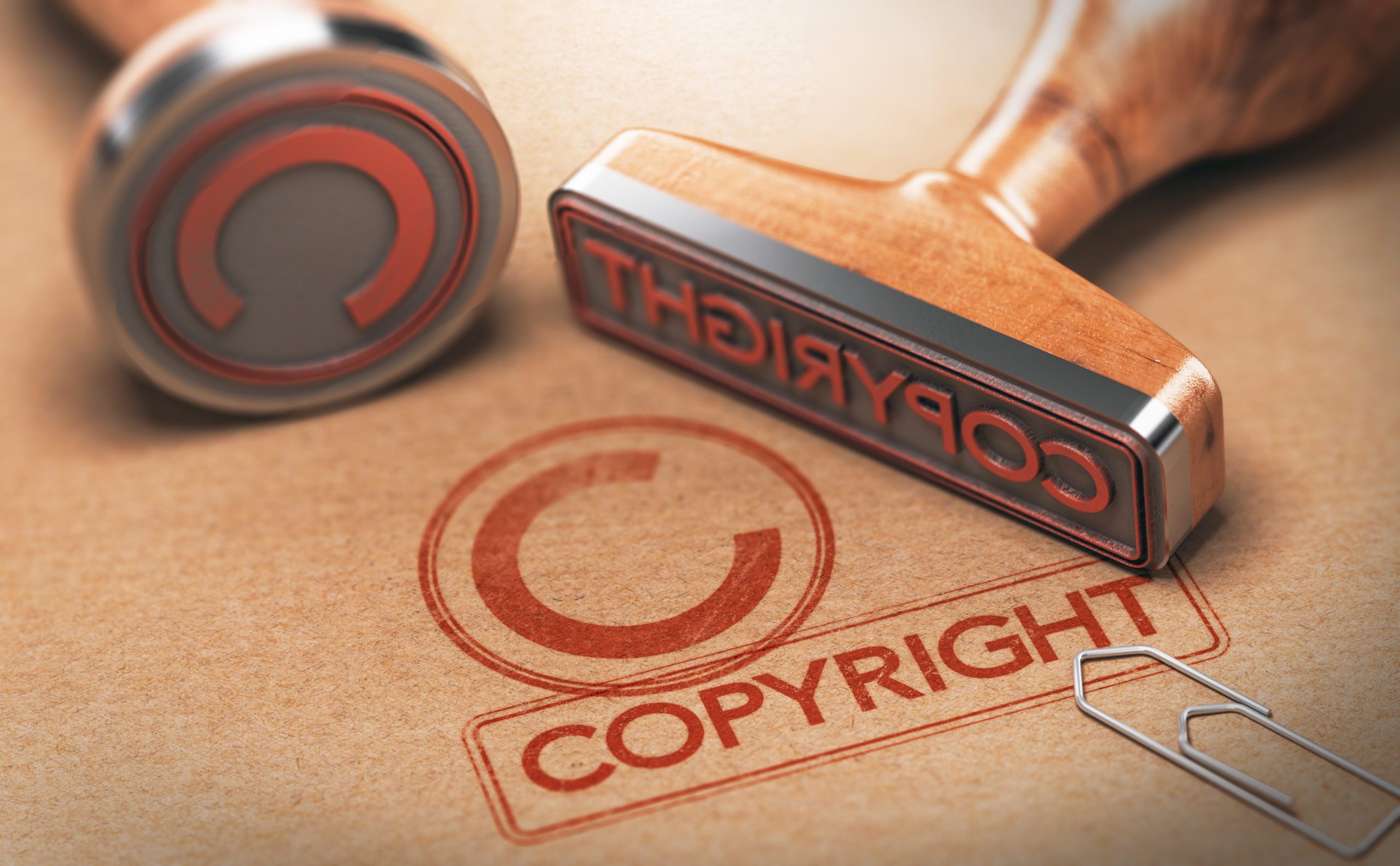
Did you know there’s an annual copyright week?
That’s right – a week dedicated to creative professionals who want to discuss how abiding by copyright law actually promotes innovation.
Let’s review. What is a copyright?
A copyright is legal protection afforded any original work of art or authorship, which has been reduced to a tangible form. Many courts define “original” as something having a “modicum” of creativity. That’s the minimum amount of creativity required for a work to be viewed as original. Yet with that in mind, you wonder why more people don’t take the time to create their own content, instead of taking someone else’s?
A copyright protects literary works of art/authorship (e.g., books, articles, blog posts, website content, music, software), visual works of art/authorship (e.g., photographs, graphic designs, logos, cartoons, sculptures, jewelry), performance works of art/authorship (e.g., pantomimes, choreographic work).
A copyright does not protect ideas, works with no original content, works not reduced to a tangible form, or works in the public domain.
Why copyright law?
Many people view laws as a way to restrict, when it’s actually the laws that protect us. Laws are made to serve the people, and in the case of copyright laws, that’s exactly what they do. Copyright policies grant ownership when culture is shared in order to keep inspiring creative processes.
And as far as culture is concerned, many argue that tangible and digital objects that become a part of history should be deemed public domain assets. If a creator wants to give away his or her rights to their creation – so be it.
For those who want to retain the credit, receive the royalties, and receive statutory damages when your works are used without permission – register your intellectual property and receive peace of mind.
And remember…
Make sure you protect your valuable content by using the appropriate copyright notice symbol and registering your work. Don’t let anyone convince you that the so-called “poor-man’s copyright” is a valid way to protect your work.
Francine D. Ward
If you’re ready to create or update your Estate Plan, schedule a consultation. If you’re still gathering information, feel free to join my Facebook community for ongoing guidance and support: Legal Insights Facebook Group.
Start here:
Estate Planning FAQs
Explore other core documents in a complete estate plan:
- Preparing for Estate Planning
- What Is a Trust
- What Is an Advance Healthcare Directive
- What Is a Durable Power of Attorney
- What Is a Will
Want to explore more topics?
View all Estate Planning articles
Connect with me:
🌐 Website |
📘 Facebook |
📸 Instagram |
💼 LinkedIn |
⭐ Yelp
fRANCINE d. wARD
- What is an Estate Plan?WHAT IS AN ESTATE PLAN? An estate plan is the finished product—the complete set of legal documents that protects you, your assets, and the people you love. It is the… Read more: What is an Estate Plan?
- What is a Power of Attorney?A Power of Attorney is one of the most misunderstood — yet most essential — documents in any estate plan. It determines who can step in and manage your financial… Read more: What is a Power of Attorney?
- Have FunHave Fun. Life Pillar. Last week, I talked about Fun as a life pillar, and not just the kind that comes from a trip or a party. Indeed, those experiences… Read more: Have Fun
- Life Pillar – FunLife Pillar – Fun is often the most misunderstood—and most neglected—pillar of a well‑designed life. People assume fun is optional, something you squeeze in after the “real” work is done.… Read more: Life Pillar – Fun
- What is a HIPAA Authorization?A HIPAA Authorization is one document included in complete estate plan. In 1996, Congress enacted the Health Insurance Portability and Accountability Act (HIPAA) to establish national standards for protecting patient… Read more: What is a HIPAA Authorization?